
Handcrafted Irish Boards
CRAFTED BY ANDRÚ MAC GIOLLA Rí

Every board here started as a tree within a few miles of the workshop in Co. Longford — storm-fallen, cleared, or taken down for another reason, and headed for firewood until I got to it. I collect the timber, mill it, dry it in small batches, and make each board by hand.
Most are end grain — cut so the knife goes between the fibres rather than across them, which is easier on your blade and heals over rather than scarring. Others are single slabs where the grain was worth leaving alone. Because every board comes from a particular tree, no two are the same, and I can tell you where yours came from.

End Grain Chopping Boards
from €200
Charcuterie & Serving Boards
from €45


Personalised Boards
from €75
Gift Vouchers
from €25
Our Story

I was given a woodworking set as a child and never really stopped. What started as a hobby turned into collecting timber other people had written off — storm-fallen trees, estate clearances, old furniture — and finding out what was inside it.
Most of what I use would otherwise have been firewood. Spalted beech especially: the dark veining that makes it worth looking at only forms in timber that’s been down a while, which is exactly the wood a sawmill won’t touch.
Twenty years of craft fairs later, I still mill everything myself. It’s the only way to know what you’re selling.
Benefits Of Using Our Chopping Boards

Kinder to knives. End grain boards are cut so the blade slides between the wood fibres rather than across them. Your knives stay sharp longer and the board closes over the cut rather than scarring.
Hygiene. Research at UC Davis found that bacteria introduced to a wooden surface migrate into the wood and die off rather than transferring back onto food, while plastic boards scored by knife cuts hold bacteria in the grooves and are harder to clean.
They last. A hardwood board that’s washed, dried and oiled will outlive you. When it eventually looks tired, a sand and a re-oil brings it back — which is not something you can say for plastic.
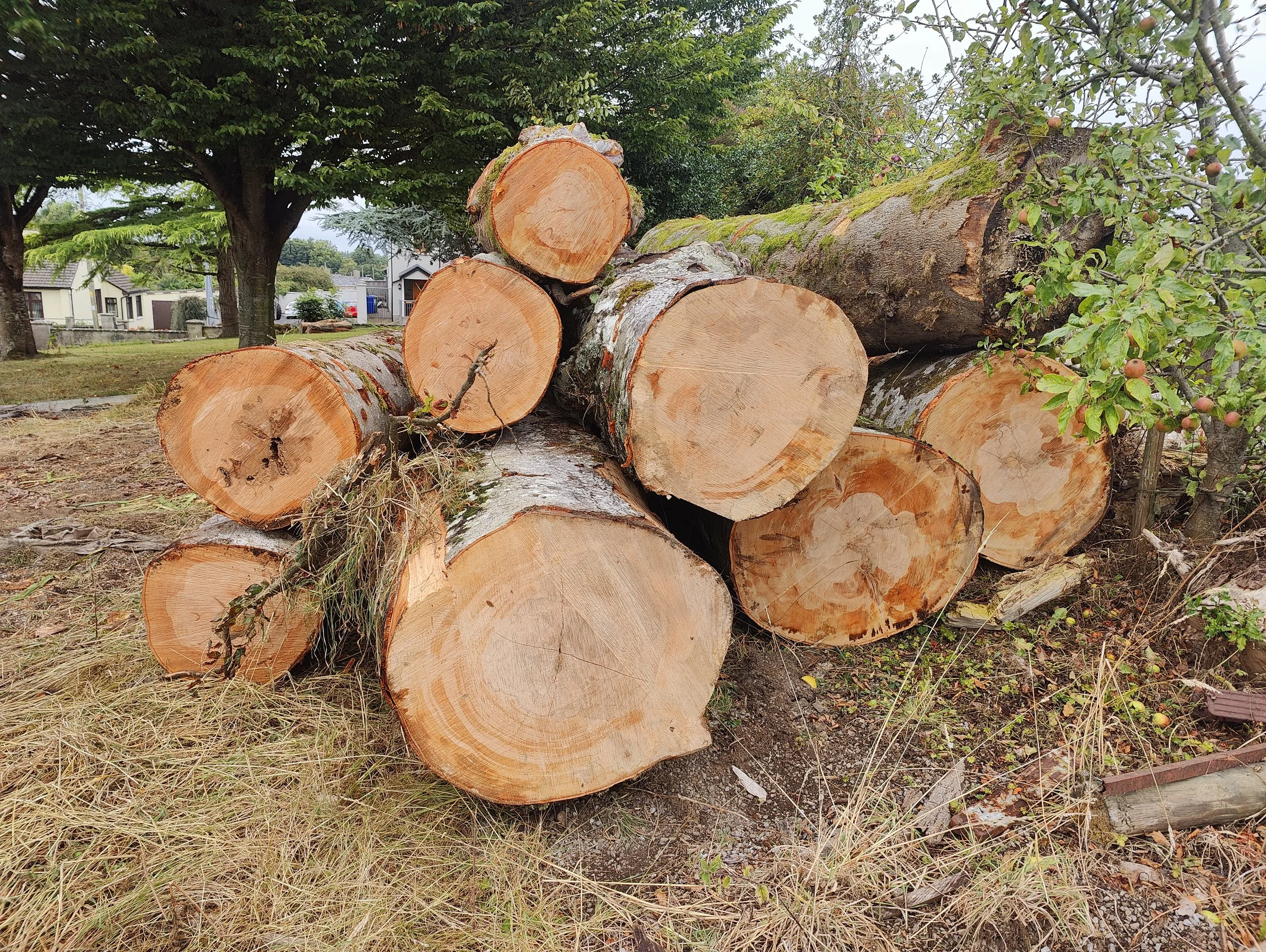
Nothing here is bought in from a timber yard. The wood comes from trees that came down locally — storms, estate clearances, trees that had to go — and would mostly have ended up as firewood.
I collect it, mill it, and stack it to dry in small batches. That takes time, which is why the range changes as different timber becomes ready rather than being the same thing year round.
It also means each board is tied to a particular tree, in a particular place, at a particular time.
Sustainable Woodworking


FAQs
-
Absolutely! We love exploring new ideas. Simply contact us with your vision.
-
The time frame varies based on complexity. We aim for swift completion without compromising quality.
-
Yes, sustainability is at our core. We use wind-fallen, recycled, and responsibly sourced timber.
-
Yes — we ship worldwide from our workshop in Co. Longford.
Ireland and the EU: the price at checkout is the final price. Nothing further to pay.
United Kingdom: because our boards are handmade in Ireland and typically valued above £135, UK customs charges apply on arrival. Your courier will contact you to collect import VAT (20% of the order value including shipping) plus a handling fee before delivery. We know that isn't ideal, and we're currently working with An Post to prepay these charges at checkout instead. If you'd like an exact figure before you order, just get in touch and we'll work it out with you.
United States and elsewhere: import duties and taxes may apply on arrival and are payable by the customer. Get in touch and we'll tell you what to expect for your country.
Full details on our Shipping & Delivery page.
-
Absolutely! We understand that everyone's needs are different. If you require a specific size for your wooden chopping board or charcuterie board, please reach out to us with your dimensions, and we'll be happy to accommodate your request.
-
No, we use only natural, food-safe finishes on our wooden boards to enhance the wood's natural beauty and ensure they are safe for use in your home.
-
Our boards are handcrafted from locally sourced Irish hardwoods, with each piece telling the story of its origin. The unique grains, natural imperfections, and the artisan's touch make each board one-of-a-kind.
-
Yes, businesses can order personalised chopping boards with their branding in bulk. We offer special rates for bulk orders. Please contact us for more information on customization options and pricing.
5.0 average from 8 reviews
“BEAUTIFUL irish product - no glue, no plastic, excellent simple design. What's not to like?"
— Diane L · December 2025“Every board is unique. Prompt and efficient delivery.”
— Aidan M · October 2025“Beautifully made chopping board, a piece of art in my kitchen!!”
— Roslyn T · November 2025“Excellent, from order to delivery it was perfect, highly recommend.”
— William F · June 2025Contact Us
